
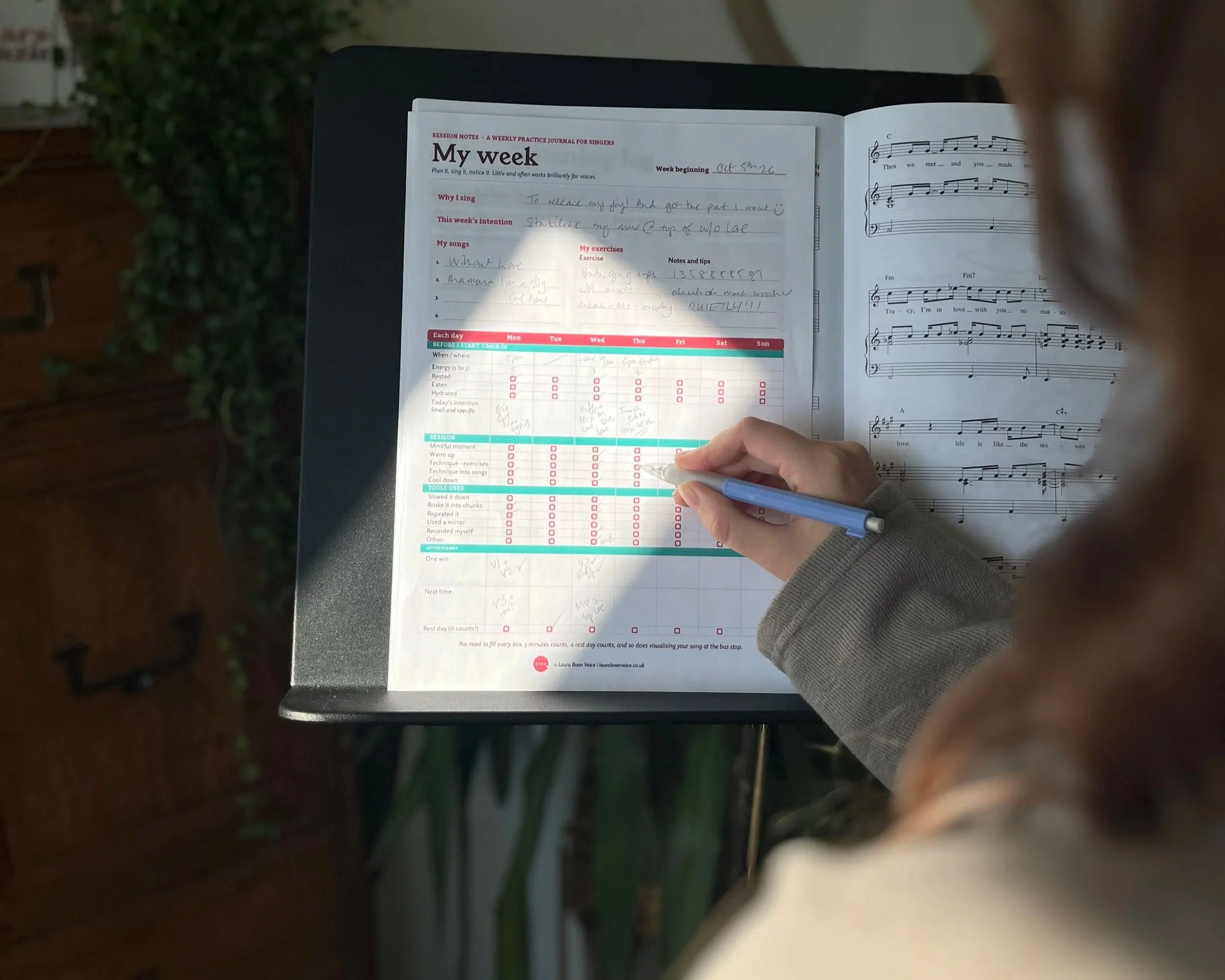
How to practise singing - Part 3: how to actually get your practice done
You know what to practise. You know how to practise. So why is it still so hard to actually do it?
This is the third post in my series on practice: what really makes a difference when you want to make changes to your voice and build new vocal skills. In this one, we're looking at how to pull it all together, and the simple tool that I think makes the biggest difference of all.

Help! I’ve got stage fright!
Performance anxiety, a.k.a. stage fright, happens to performers the world over, and at all levels of experience, including international superstars like Andrea Bocelli and Adele.
But there ARE ways to help reduce its impact. Here are some of them…

What key should I sing it in?
It’s sometimes seen as a badge of honour to be able to sing songs in the original key, but in my opinion this is just silly. Why would you not want to make your singing both comfortable, enjoyable, and have it show you and your voice off to its best? So wherever possible, I always advocate for changing the key to suit your voice. How to find the best key for your voice…

4 ways to prepare for a performance
Putting work into developing your vocal coordination and technical abilities whether or not you have any performances lined up is a smart move. Then you'll be able to trust your instrument to technically manage the demands of the songs when those performance opportunities come up. What does this look like in reality?

How to ad lib (for those who find it scary!)
Some singers find improvising very intuitive, but others find the prospect very daunting! If you’re in the latter camp, then this blog post is for you!

How to memorise lyrics
For some of us, this is one of the hardest parts of learning to sing. Over the years I’ve worked out a few ways to help those lyrics go in… here are some I’ve found most helpful: