
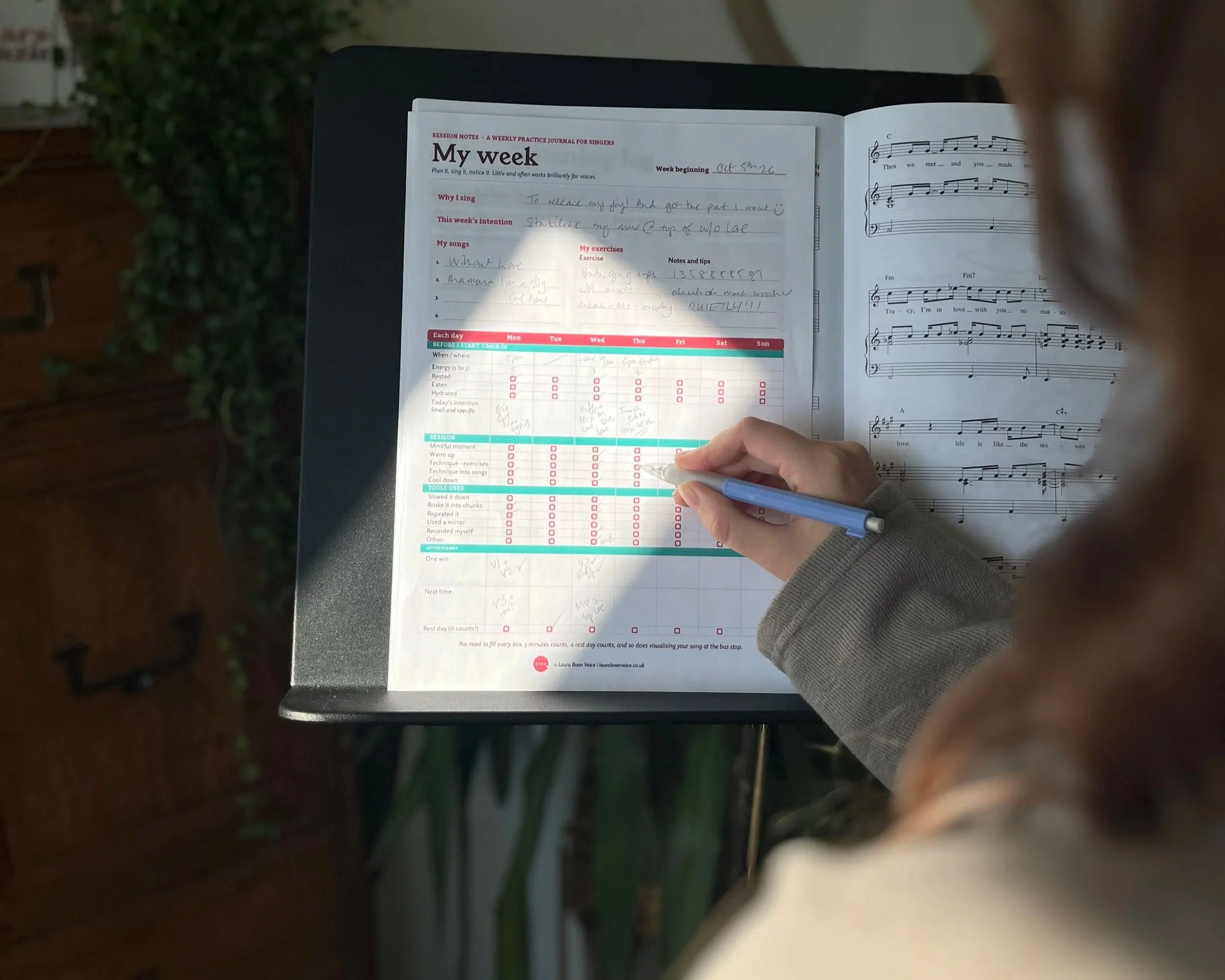
How to practise singing - Part 3: how to actually get your practice done
You know what to practise. You know how to practise. So why is it still so hard to actually do it?
This is the third post in my series on practice: what really makes a difference when you want to make changes to your voice and build new vocal skills. In this one, we're looking at how to pull it all together, and the simple tool that I think makes the biggest difference of all.

Help! I’ve got stage fright!
Performance anxiety, a.k.a. stage fright, happens to performers the world over, and at all levels of experience, including international superstars like Andrea Bocelli and Adele.
But there ARE ways to help reduce its impact. Here are some of them…

What key should I sing it in?
It’s sometimes seen as a badge of honour to be able to sing songs in the original key, but in my opinion this is just silly. Why would you not want to make your singing both comfortable, enjoyable, and have it show you and your voice off to its best? So wherever possible, I always advocate for changing the key to suit your voice. How to find the best key for your voice…

4 ways to prepare for a performance
Putting work into developing your vocal coordination and technical abilities whether or not you have any performances lined up is a smart move. Then you'll be able to trust your instrument to technically manage the demands of the songs when those performance opportunities come up. What does this look like in reality?

How to memorise lyrics
For some of us, this is one of the hardest parts of learning to sing. Over the years I’ve worked out a few ways to help those lyrics go in… here are some I’ve found most helpful:

6 Ways You Can Practise Singing Silently
As much as we might love singing there are times when we need to be quiet, whether that’s because we are in a place where we can’t sing full volume (such as if it’s very late and you’ve got neighbours, a sleeping baby, or a housemate with a headache), we’re going about our daily lives in public (like in queue at the post office or on a train on the way to work) or we have a vocal health issue that needs vocal rest. In these kinds of circumstances, there are still several ways of practising singing without actually singing. Here are a few ideas for silent practice…